everyday closet
Personalised Outfit Platform for Context-Aware Wardrobe Styling
Role
Product Designer (UX/UI&Branding) 100%
Time Frame
9 Weeks
Aug-Nov 2024
Tools
Figma, Illustrator, Photoshop, Premiere Pro, Procreate & Chat GPT
Client
QUT Capstone Project
Discover
Outfit selection is a high-frequency decision-making process that consistently accumulates cognitive load
On average, people spend about 15 minutes per day deciding what to wear, adding up to roughly eight months over a lifetime (ages 18–80).
Also triggering measurable emotional stress in a significant portion of users.
28% of adults experience frustration strong enough to consider giving up or discarding clothes, and 1 in 5 feel significant stress when choosing what to wear.

Screenshots from fashion blogs and articles discussing the challenges of outfit selection.
"Why do people still struggle to choose outfits from their existing wardrobe?"
To answer this question, I conducted in-depth interviews with 8 participants to better understand their outfit selection process, challenges, and decision-making process.
The goal of these interviews was to identify key challenges in how users choose what to wear.
I discovered that users struggle to make confident outfit decisions because they lack visibility into their existing wardrobe and possible outfit combinations.
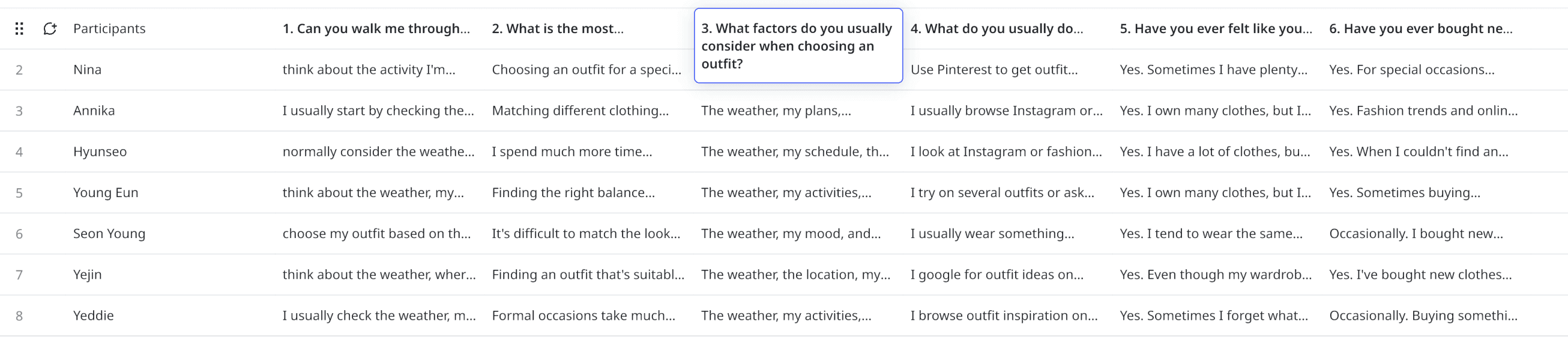
In-depth Interview Responses
Interview Participants
Owned more than 100 items of clothing
Frequently experienced difficulty choosing outfits
Used fashion apps or social media for outfit inspiration at least occasionally

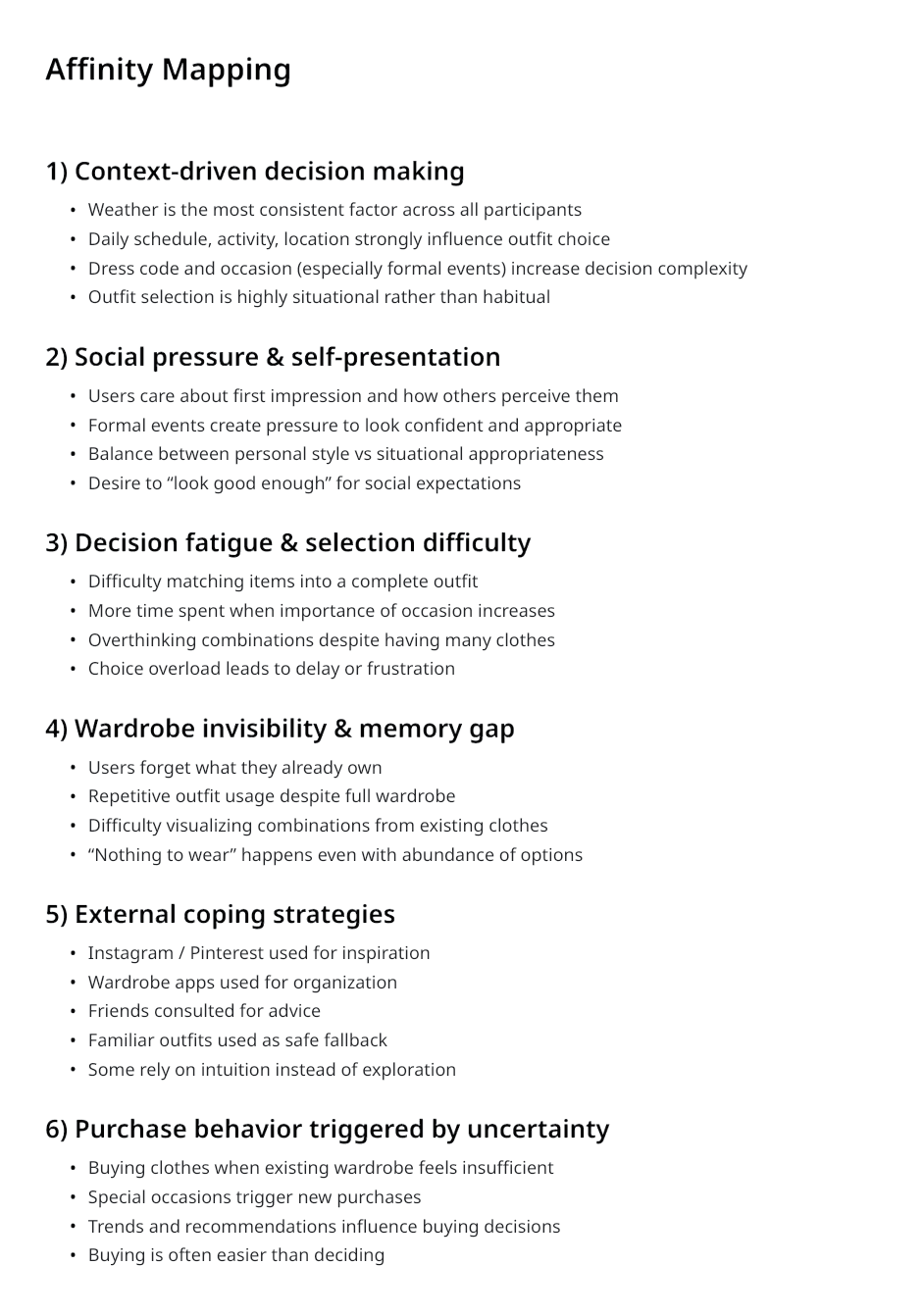
Affinity mapping
After identifying the key challenges in outfit selection, I analysed existing personalised fashion apps to understand what factors they consider when supporting users' outfit decision-making.
The competitive analysis revealed that existing personalised fashion apps consider only a limited set of factors, requiring users to manually balance the remaining aspects of the outfit decision-making process.
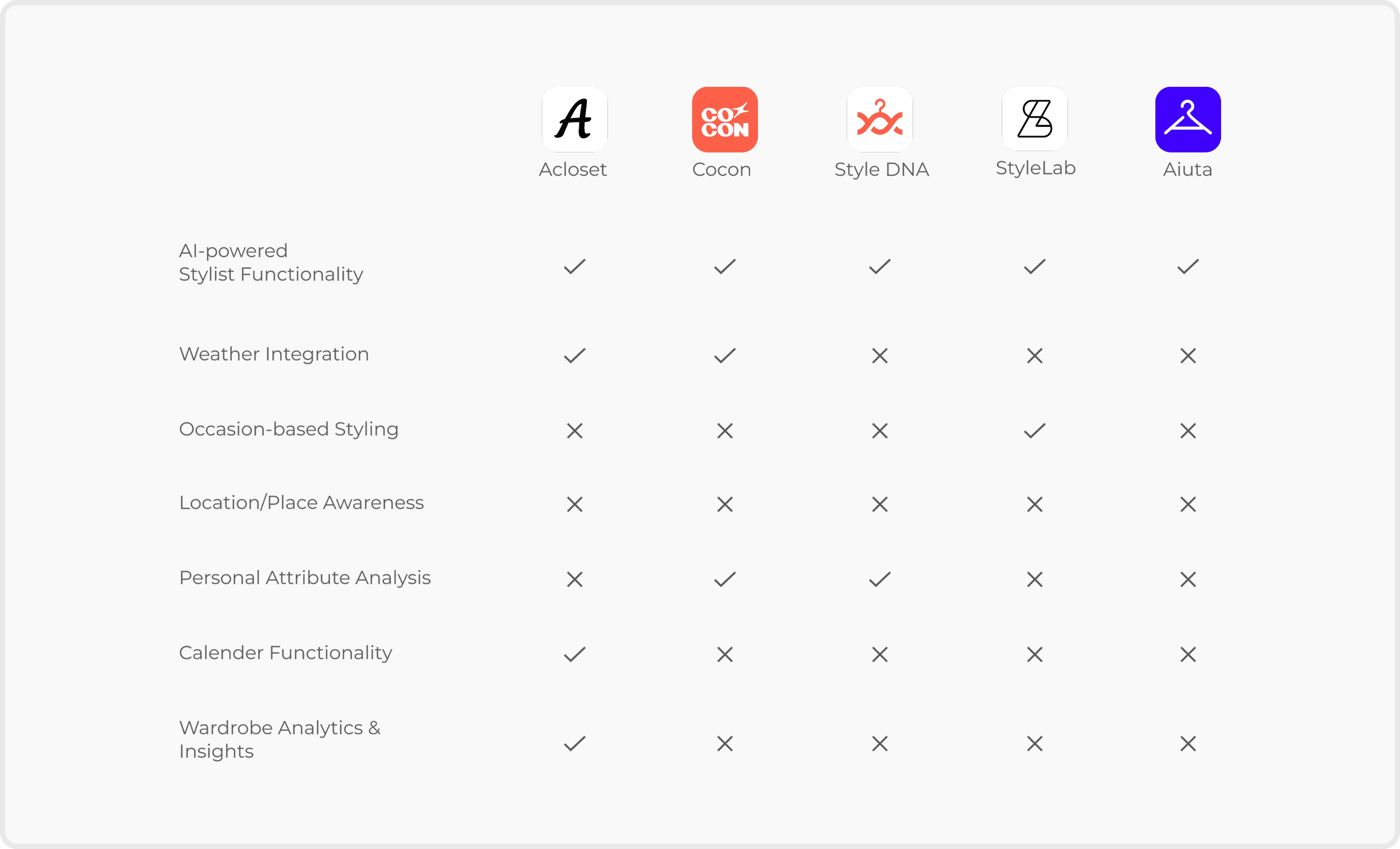
Competitive Analysis
Define
Based on the competitive analysis, I identified an opportunity to design a personalised fashion platform that better supports real-life outfit decision-making by considering multiple contextual factors.


Market Analysis & Positioning Map
Instead of simply suggesting outfits, I wanted to focuse on supporting the full decision-making process by integrating users’ existing wardrobe with real-life contextual factors such as weather, schedule, occasion, and personal preferences.
“How might we help users make efficient outfit decisions by considering both their existing wardrobe and everyday context?”
Develop
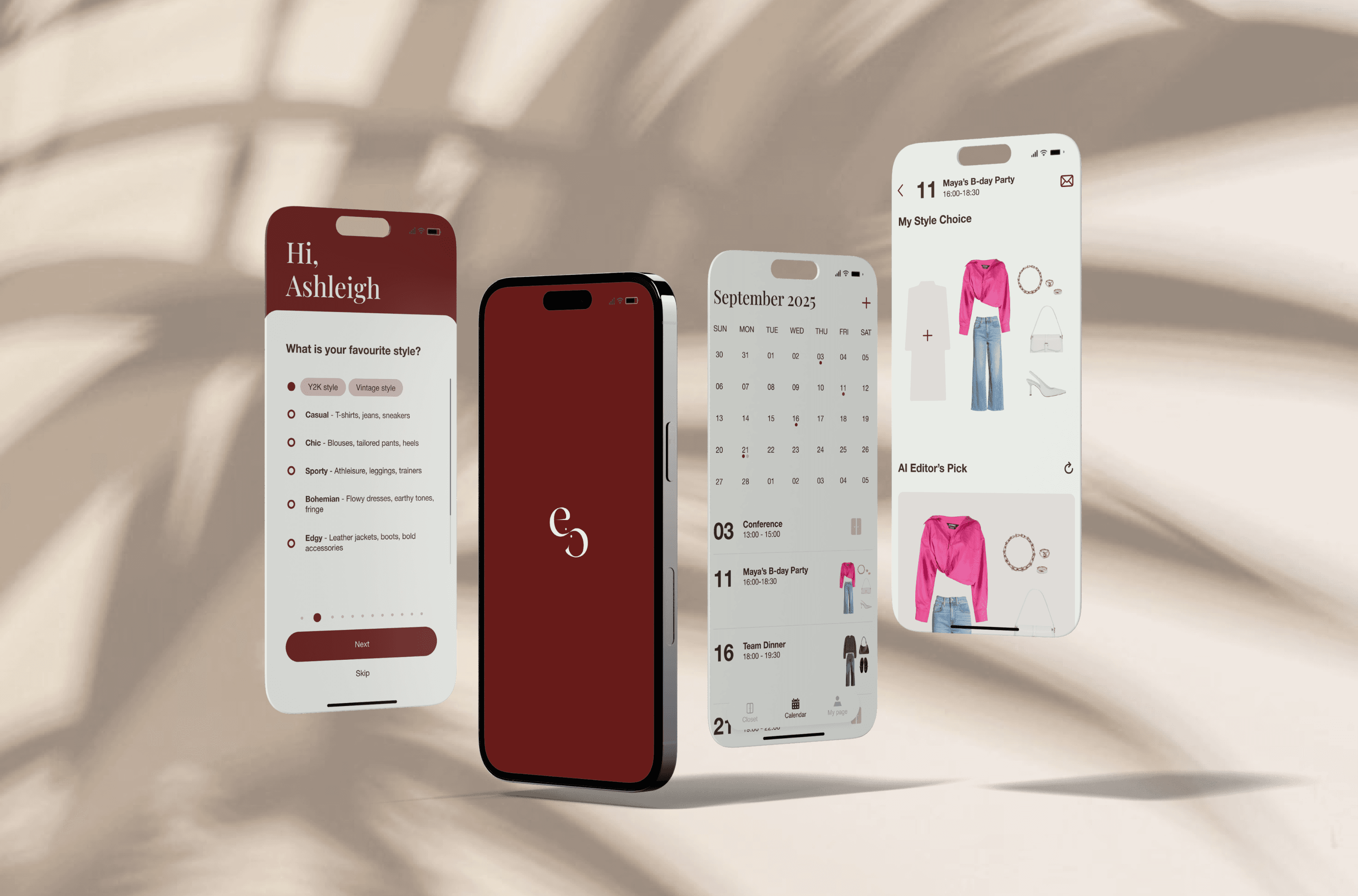
everyday closet is a decision-support fashion platform that helps users make outfit choices by combining their existing wardrobe with real-life context.
Design Process - from sketch to hi-fi prototype
Design Process - from sketch to hi-fi prototype
MAIN FEATURES
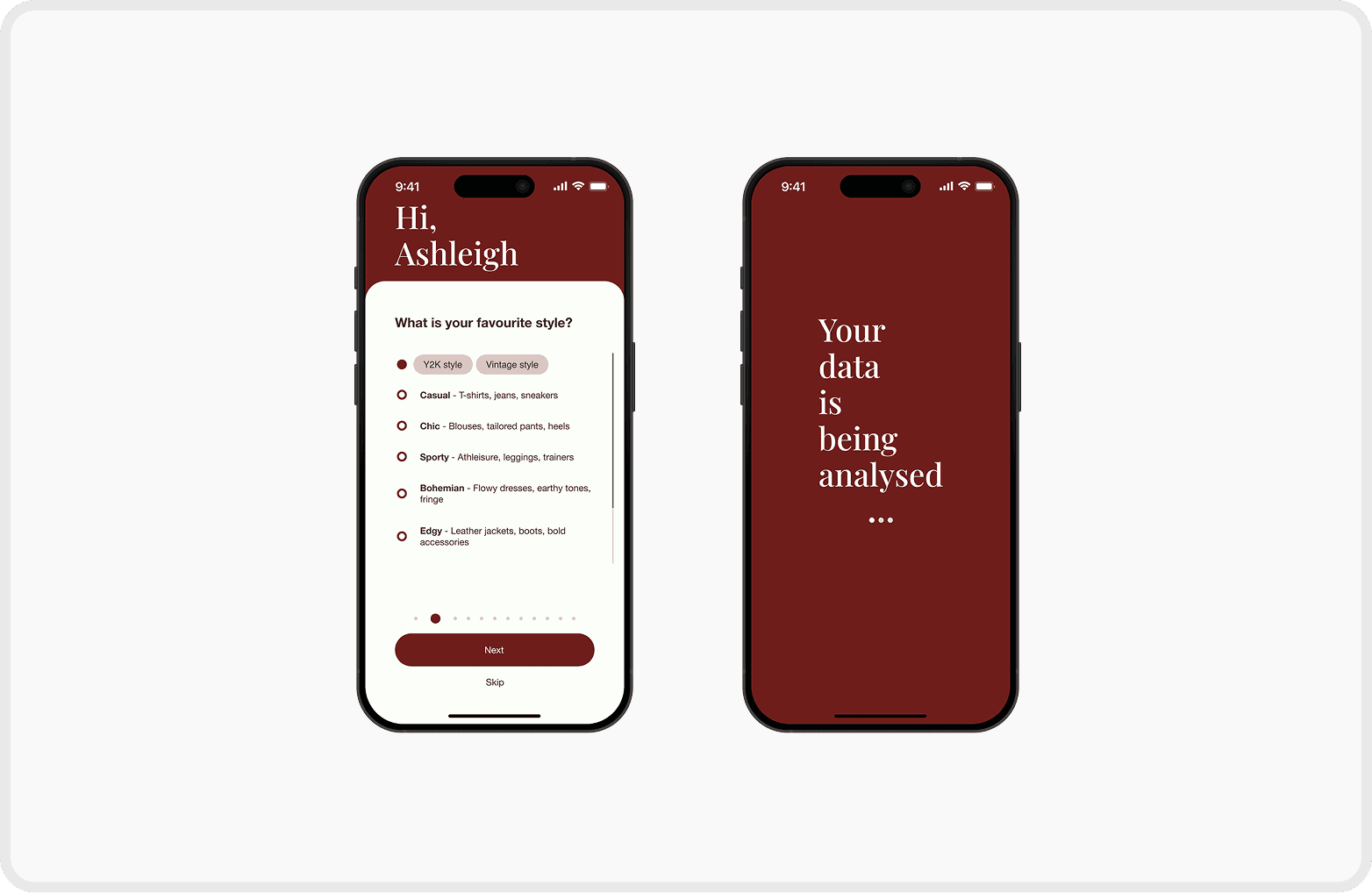
Style Quiz
A short onboarding quiz that captures users’ style preferences and physical characteristics, enabling outfit suggestions that reflect real-life context rather than isolated choices.

Calendar & Event Planning
Links outfit planning to users’ schedules and events, reducing preparation stress and supporting confident participation.

Social Sharing
Enables users to share dress codes and outfit ideas, helping users feel socially prepared and connected.

AI Stylist Section
Generates outfit combinations by analysing user preferences, wardrobe items, schedule, weather, and event context.
Deliver
DEMO VIDEO
FIGMA PROTOTYPE
This prototype focuses on key interactions rather than full functionality.
Please watch the walkthrough video first to understand the designed flow before exploring the prototype.
BRAND GUIDELINES
DESIGN SYSTEM
Reflection
Biggest Challenges
Avoiding overwhelming users
Solved with:
Progressive disclosure
Clear hierarchy
Intuitive navigation
What I Learned
User testing helped uncover structural and contextual issues, including usability and information clarity problems, reinforcing the value of testing early to improve overall user experience.
What I'd Do Differently
Balancing personalisation with simplicity
Conduct usability testing earlier
Test even rough wireframes
Faster iteration cycle